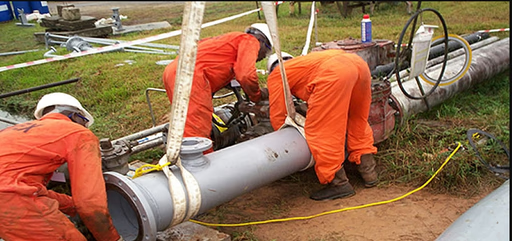
Our Services
Sandblasting & Painting
Surface preparation and protective coating services for corrosion-control, maintenance and asset-protection requirements.
What is Sandblasting & Industrial Painting?
Sandblasting and industrial painting are essential components of corrosion control and asset protection. The process involves preparing a substrate to an appropriate level of cleanliness and surface profile before applying a protective coating system designed for the operating environment.
At AQMOND, we provide surface preparation and industrial coating services for pipelines, structural steel, tanks, equipment, piping systems, and other metallic assets. Our approach focuses on achieving the required surface condition before coating application and maintaining control throughout the coating process.
Proper preparation is critical because contaminants, corrosion products, old coatings, soluble salts, and inadequate surface profile can compromise coating adhesion and reduce the service life of the protective system.
How Sandblasting & Painting is Done
Surface Assessment & Preparation
- Initial Inspection:
- The substrate is inspected to determine its existing condition, including corrosion, previous coatings, surface contamination, damage, and areas requiring repair or additional preparation.
- Removal of Contaminants:
- Oil, grease, dirt, salts, dust, and other contaminants are removed before abrasive blasting.
- The required cleaning method is determined according to the condition of the substrate and the coating specification.
- Masking & Protection:
- Areas that should not be blasted or coated are appropriately protected.
- Equipment, openings, instruments, electrical components, and adjacent surfaces are protected where required.
Abrasive Blasting
- Abrasive Selection:
- The appropriate abrasive media and blasting method are selected according to the substrate, required surface condition, coating system, and project specification.
- Blast Cleaning:
- Abrasive media is propelled against the substrate to remove rust, mill scale, existing coatings, corrosion products, and other contaminants.
- The objective is to achieve the specified degree of surface cleanliness without unnecessarily damaging the substrate.
- Surface Profile:
- Abrasive blasting creates a controlled surface profile that allows the coating to mechanically bond to the prepared substrate.
- Surface profile is assessed against the requirements of the specified coating system.
Different levels of blast cleanliness may be specified depending on the coating system and service environment. Industry standards include commercial, near-white metal, white metal, and other defined surface-preparation conditions.
Surface Inspection Before Painting
Surface preparation does not end when the blasting is complete.
- Visual Inspection:
- The prepared surface is visually examined to confirm that the required level of cleanliness has been achieved.
- Remaining rust, mill scale, old coating, dust, or other visible contaminants are assessed against the applicable specification.
- Surface Profile Measurement:
- The surface profile is measured to verify that the prepared substrate provides the appropriate texture for the specified coating system.
- Dust Assessment:
- Prepared surfaces may be checked for residual dust that could interfere with coating adhesion.
- Soluble Salt Testing:
- Where required, surfaces are assessed for soluble salts and other non-visible contaminants that could contribute to premature coating failure.
AMPP's surface-preparation guidance specifically identifies surface cleanliness, surface profile, and testing for non-visible contaminants such as soluble salts as important parts of surface preparation.
Industrial Painting & Protective Coating
Once the substrate has been properly prepared and inspected, the specified coating system can be applied.
- Coating Selection:
- The coating system is selected according to the substrate, operating environment, exposure conditions, required performance, and project specification.
- Factors such as atmospheric exposure, immersion, chemical exposure, temperature, moisture, and mechanical conditions may influence coating selection.
The coating specification should establish the required product, surface preparation, and application requirements rather than treating the paint product alone as the complete specification.
- Primer Application:
- Where specified, a primer coat is applied to the prepared substrate to establish the foundation of the protective coating system.
- Intermediate Coat:
- Additional coating layers may be applied where required to achieve the specified protection and total coating thickness.
- Topcoat Application:
- A final protective or finish coat is applied according to the coating system requirements, providing the specified appearance and additional environmental protection.
- Application Methods:
- Depending on the project and coating system, coatings may be applied using appropriate spray, brush, roller, or other approved application methods.
Environmental & Application Controls
Coating application is highly dependent on the environment in which the work is performed.
- Temperature & Humidity:
- Ambient and substrate temperatures are monitored during coating application.
- Relative humidity and other environmental conditions are considered to reduce the risk of condensation and coating defects.
- Surface Condition:
- The substrate must remain in an acceptable condition between preparation and coating application.
- Where contamination, moisture, or corrosion develops after preparation, additional preparation may be required before coating.
- Coating Application Conditions:
- Coating materials are mixed, applied, and handled according to the manufacturer's requirements and project specification.
Industrial coating programs commonly incorporate environmental and safety controls, process control, surface preparation, and liquid coating application as distinct parts of the coating process.
Coating Inspection & Quality Control
- Wet Film Thickness:
- During application, wet film thickness may be checked to help control the amount of coating being applied.
- Dry Film Thickness:
- After curing, dry film thickness measurements are taken where required to verify that the applied coating meets the specified thickness.
- Visual Inspection:
- Finished coatings are examined for defects such as runs, sags, pinholes, blistering, poor coverage, overspray, cracking, or other visible imperfections.
- Adhesion Testing:
- Where specified, adhesion testing may be performed to evaluate the bond between the coating system and substrate.
- Holiday Detection:
- For appropriate coating systems and applications, holiday detection may be used to identify discontinuities or pinholes that could expose the underlying substrate.
- Documentation:
- Inspection results, environmental conditions, coating materials, preparation activities, application records, and relevant measurements are documented as required by the project.
Corrosion Protection Through Proper Coating
A properly prepared and applied coating system creates a protective barrier between the metallic substrate and its surrounding environment.
This helps reduce exposure to moisture, oxygen, chemicals, salts, and other conditions that can contribute to corrosion.
For assets such as pipelines and industrial structures, coating systems are an important part of the overall corrosion-control strategy. Pipeline coating specifications, for example, establish requirements for surface preparation, coating type, and application according to the service environment and asset requirements.
Our Approach to Sandblasting & Painting
At AQMOND Global Investment Ltd, we treat surface preparation and coating application as a controlled technical process rather than simply a painting operation.
- Thorough Surface Preparation:
- We focus on achieving the specified surface condition before coating application.
- Appropriate Coating Systems:
- Coating selection and application are aligned with the requirements of the asset and operating environment.
- Process Control:
- Surface preparation, environmental conditions, coating application, curing, and inspection are monitored throughout the work.
- Quality Inspection:
- Relevant measurements and inspections are performed to verify that the completed coating system meets the applicable requirements.
- Safety-Conscious Execution:
- Blasting and coating operations are conducted with appropriate controls for personnel, equipment, surrounding areas, and the working environment.
Why Choose AQMOND for Sandblasting & Painting?
By choosing AQMOND Global Investment Ltd, you benefit from:
- Professional abrasive blasting and surface preparation
- Industrial protective coating application
- Corrosion-control support
- Surface cleanliness and profile assessment
- Coating thickness and quality inspection
- Solutions for pipelines, structures, tanks, equipment, and industrial assets
- Safety and process-focused execution
Our objective is to provide more than a clean and finished surface. AQMOND's Sandblasting & Painting services are focused on preparing, protecting, and preserving critical assets against the conditions that can lead to premature deterioration and corrosion.
Ready to Start Your Next Project?
Let AQMOND partner with you to deliver tailored solutions that meet your needs and exceed your expectations. Reach out to us today and take the first step toward success.
Contact Us